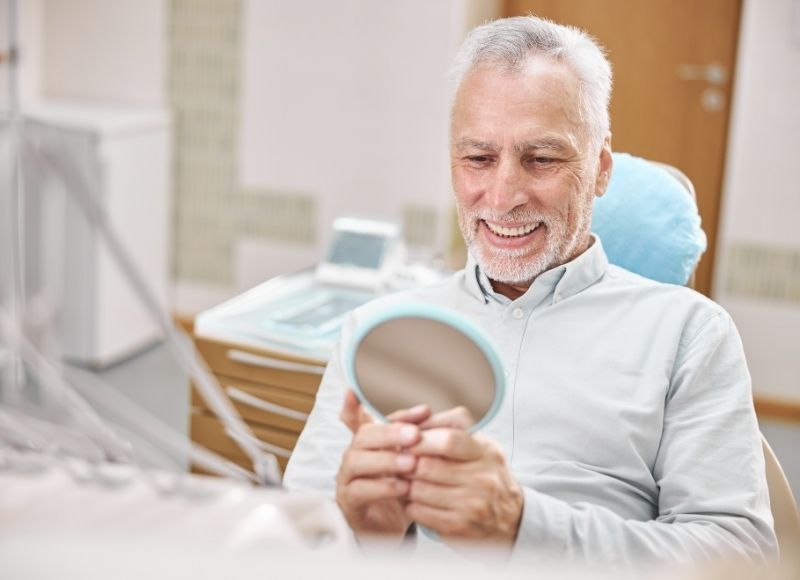
A significant number of patients with missing teeth ask the same question when considering their treatment options:
"Should I choose a removable denture, or would an implant supported fixed restoration be a better solution for me?"
The answer cannot always be determined simply by the number of missing teeth or by X ray images. Many different factors influence the treatment decision. Financial considerations, concerns about surgical procedures, and incomplete or inaccurate information from others can all make the decision making process more challenging.

As dentists, there is an important point we sometimes overlook. Throughout our professional careers, we diagnose and treat hundreds, even thousands, of similar cases. For our patients, however, this is often the first time they have faced such an important and uncertain decision. Understanding their concerns, expectations, and hesitations is just as important as the technical aspects of treatment planning.
In reality, most patients are not asking, "Which treatment is the best?" They are asking, "Which treatment is the right one for me?"
In this article, as in my previous writings, I will avoid overwhelming you with complex technical terminology or scientific details. Instead, I will explain in clear, easy to understand language the effects that removable dentures and implant supported fixed restorations can have on everyday life.
My goal is not to criticize any treatment option or suggest that there is only one solution for every patient. Rather, I would like to evaluate these treatments from the patient's perspective by discussing aspects that are often overlooked, such as chewing ability, speech comfort, taste perception, self confidence, social life, and overall quality of life.
After all, the purpose of dental treatment is not simply to replace missing teeth. The real goal is to preserve and whenever possible, improve a person's quality of life.
With that in mind, let's look beyond dentistry alone and compare removable dentures and implant supported fixed restorations from the perspective of everyday living.
Missing teeth are not merely an aesthetic concern. While many people associate tooth loss only with appearance, missing teeth directly affect chewing function, speech, taste perception, eating habits, and self confidence, making them a comprehensive health issue that can significantly influence overall quality of life.
Removable dentures often appear attractive because they do not require surgery, usually involve lower initial treatment costs, and can often be completed in a shorter period. For patients who are anxious about surgery or looking for a more affordable solution, removable dentures remain an important treatment option.
However, compared with natural teeth, removable partial dentures generally provide lower chewing efficiency. As a result, patients may gradually begin avoiding hard, fibrous, or chewy foods without even realizing it. Over time, this can lead to noticeable changes in dietary habits, with softer foods becoming the preferred choice.
In complete upper dentures or removable dentures that cover the palate, part or all of the roof of the mouth is covered. This reduces the natural contact between food and the oral tissues, potentially affecting the perception of flavor, temperature, and texture. Some patients report that they no longer enjoy meals as much as they once did. Although this does not occur to the same degree in every patient, it is an important factor that may influence quality of life.
Speech is another complex function that we usually take for granted. Teeth, lips, tongue, and palate work together in harmony. Patients wearing removable dentures, especially during the initial adaptation period, may have difficulty pronouncing certain sounds. Some also worry that the denture may shift while speaking, which can reduce their confidence. Although many patients eventually adapt, achieving the same level of speech comfort as with natural teeth or implant supported fixed restorations is not always possible.
Many removable denture wearers also worry that their dentures might move while eating, laughing, or speaking. As a result, some become more reserved in social situations, avoid smiling freely, or refrain from eating certain foods. The need for denture adhesives and the constant awareness of a foreign object inside the mouth can further reduce daily comfort.
The effects of missing teeth extend far beyond the mouth itself. Many patients gradually begin avoiding smiling, dislike having their photographs taken, and become more withdrawn in social settings. Individuals who have worn removable dentures for many years may experience reduced self confidence, feel older than they are, and develop social anxiety. For this reason, the goal of dental treatment is not only to restore missing teeth but also to support emotional well being and social quality of life.
A large proportion of patients who wear complete or partial removable dentures are over the age of 50, 60, or 70. As we age, the digestive system, circulatory system, and other organs naturally lose some of their efficiency.
Digestion begins in the mouth. When food is not chewed adequately before reaching the stomach, the digestive system may need to work harder. Although digestion depends on many factors, effective chewing remains an important part of a healthy digestive process. Therefore, maintaining strong chewing ability becomes increasingly important not only for comfort but also for overall health.
People with natural teeth generally have strong chewing forces. In contrast, patients with removable dentures often experience a significant reduction in both chewing strength and chewing efficiency. Consequently, many struggle to eat meat, nuts, raw vegetables, and other fiber rich foods, gradually shifting toward softer foods. This change often happens slowly and may negatively affect nutritional quality.
Following tooth extraction, gradual loss of jawbone volume is a natural biological process. While removable dentures replace missing teeth, they cannot provide the physiological stimulation that natural tooth roots or dental implants offer. Over time, bone loss may continue, the denture may become less stable, and patients may require periodic adjustments, relining, or replacement.

In the past, the primary goal of treatment was simply to provide a functional denture. Today, modern dentistry aims much higher. Beyond creating an attractive smile, the focus is on restoring efficient chewing, natural speech, healthy nutrition, long term bone preservation, and improved quality of life. For this reason, implant supported fixed restorations have become one of the most preferred treatment options for suitable patients.
All on 4 and All on 6 treatments are modern solutions that restore a full arch of teeth using a limited number of dental implants. Compared with removable dentures, they offer stronger chewing performance, remain securely fixed in the mouth, improve speech comfort, and significantly enhance patients' daily quality of life. Of course, the most appropriate treatment option should always be determined following a comprehensive clinical and radiographic evaluation.
Dental treatment should never be viewed simply as replacing missing teeth. The true goal is to enable patients to eat comfortably, speak clearly, enjoy their favorite foods again, smile with confidence, and live the coming years with greater comfort and confidence.
For this reason, when choosing between removable dentures and implant supported fixed restorations, it is important to consider not only the initial treatment cost but also the long term impact on quality of life. A well planned treatment often changes far more than just a patient's smile it can positively transform everyday life.
As we have seen, removable dentures remain an important and successful treatment option when selected for the right patient or in cases where implant treatment is medically contraindicated. However, particularly over many years of use, they may present limitations in chewing efficiency, speech comfort, taste perception, bone preservation, and overall quality of life.
In modern dentistry, our goal is not simply to replace missing teeth. Our ultimate objective is to help patients eat more comfortably, speak with greater confidence, enjoy the foods they love, and maintain the highest possible quality of life as they age.
Therefore, when deciding between removable dentures and implant supported fixed restorations, it is important to think not only about today but also about five, ten, or even twenty years into the future. The right treatment is one that is individually planned based on the patient's age, bone structure, overall health, expectations, and lifestyle.
Finally, it is important to remember that there is no single treatment that is right for everyone. The most appropriate solution for you should always be determined through a thorough clinical examination and evidence based professional evaluation.